
Anúncios
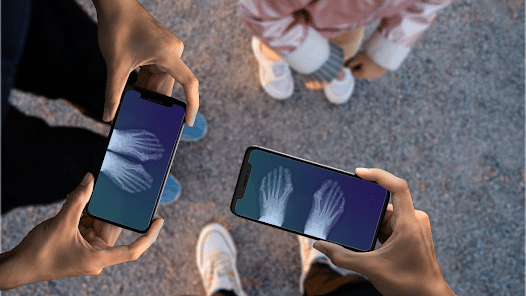
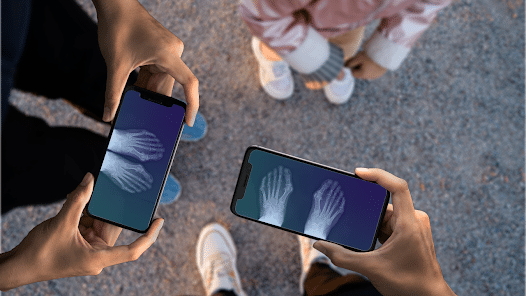
Ever wondered if your smartphone could see through walls or clothes like a superhero? The concept of X-ray vision on cell phones has captured imaginations worldwide.


The fascination with X-ray technology on mobile devices isn’t entirely new, but recent developments in smartphone cameras and imaging software have reignited interest in what these pocket-sized computers can actually accomplish. From augmented reality filters to infrared capabilities, our phones are becoming increasingly sophisticated visual tools.
Anúncios
But before we dive into downloading apps claiming supernatural powers, it’s essential to separate genuine technology from clever marketing tricks. Understanding what’s actually possible—and what remains firmly in the realm of science fiction—will help you make informed decisions about the apps you choose and the privacy concerns surrounding them.
🔍 The Reality Behind X-Ray Vision Apps
Let’s address the elephant in the room: true X-ray vision through your smartphone camera doesn’t exist in the way movies portray it. Authentic X-ray imaging requires specialized equipment that generates X-ray radiation and captures how it passes through objects. Your phone simply doesn’t have this capability, and for good reason—X-ray machines are regulated medical devices requiring proper shielding and trained operators.
Anúncios
What many “X-ray vision” apps actually do is apply clever filters and image manipulation techniques that create the illusion of seeing through surfaces. These apps use various methods including adjusting contrast, applying color filters, or overlaying pre-rendered transparent images to simulate an X-ray effect.
Some apps leverage your phone’s existing camera capabilities in creative ways. For instance, certain infrared wavelengths can penetrate thin materials, and while most smartphone cameras have infrared filters, some light may still get through under specific conditions.
📱 How X-Ray Camera Apps Actually Work
Modern X-ray vision apps employ several techniques to create their effects. Understanding these methods helps demystify what happens when you point your camera at an object and activate the “X-ray mode.”
Image Processing and Filter Technology
The most common approach involves sophisticated image processing algorithms. These apps analyze the image captured by your camera in real-time, then apply filters that adjust brightness, contrast, saturation, and color channels. By manipulating these parameters, developers can create effects that resemble X-ray photography or thermal imaging.
The algorithms often detect edges and contrast boundaries, emphasizing certain features while diminishing others. This creates a visual effect where some elements appear transparent or translucent, giving the impression of seeing beneath the surface.
Augmented Reality Integration
Advanced apps incorporate augmented reality (AR) frameworks that overlay digital content onto the real-world camera view. These applications might detect specific patterns or shapes and then superimpose transparent layers or skeletal structures that align with the detected objects.
For example, when pointed at a human figure, the app might detect the body outline and overlay a pre-designed skeletal image that moves and adjusts based on the person’s position. While visually impressive, this is purely digital trickery rather than actual penetrative imaging.
Infrared Detection Capabilities
Some premium smartphones have multiple camera sensors, including those sensitive to near-infrared light. A few specialized apps attempt to utilize these sensors to detect heat signatures or light wavelengths invisible to the human eye. While this technology is real, its practical applications are limited and don’t constitute true X-ray vision.

🎯 Popular Use Cases and Entertainment Value
Despite their technological limitations, X-ray vision apps have found a devoted audience. People download these applications for various reasons, most revolving around entertainment and novelty rather than practical utility.
Pranks and Social Entertainment
The most common use case involves pranking friends and family members. The novelty of pretending to see through clothing or objects provides momentary amusement at parties or gatherings. Many users share screenshots or videos on social media, generating engagement through humor and curiosity.
These apps often include realistic sound effects and visual indicators that enhance the illusion, making the prank more convincing to unsuspecting participants. However, it’s crucial to use such features responsibly and with consent from everyone involved.
Educational Demonstrations
Some educators and parents use these apps as conversation starters about real imaging technology. By exploring what the apps can and cannot do, young people learn about genuine X-ray technology, optical illusions, and digital image manipulation.
This educational angle transforms a novelty app into a teaching tool, encouraging critical thinking about technology claims and helping develop healthy skepticism toward “too good to be true” applications.
Artistic and Creative Projects
Photographers and digital artists sometimes incorporate X-ray filter effects into creative projects. The unique aesthetic produced by these filters can add an interesting dimension to artistic compositions, music videos, or experimental film projects.
By combining multiple filter layers and adjusting settings manually, creative professionals can achieve distinctive visual styles that wouldn’t be possible with standard camera applications.
⚖️ Privacy Concerns and Ethical Considerations
The existence of apps claiming X-ray capabilities raises legitimate privacy and ethical questions. Even though these apps cannot truly see through clothing or walls, their mere existence can create discomfort and concern.
Misrepresentation and False Advertising
Many X-ray vision apps use misleading marketing tactics, implying capabilities they simply don’t possess. This false advertising can be problematic, especially when it causes anxiety about privacy violations that aren’t technically possible.
App stores have implemented policies to combat deceptive descriptions, but enforcement remains inconsistent. Users should always read reviews and research apps thoroughly before downloading, particularly those making extraordinary claims.
Consent and Respectful Usage
Even as entertainment tools, these apps should be used with consideration for others. Pointing your phone at someone while running an X-ray app—even knowing it doesn’t actually work—can make them uncomfortable and violate social boundaries.
The ethical use of any camera-based technology requires respecting people’s privacy and dignity. Obtaining consent before including others in photos or videos remains essential, regardless of the filters or effects being applied.
Impact on Vulnerable Populations
Children and less tech-savvy individuals might genuinely believe these apps work as advertised, leading to anxiety or inappropriate behavior. Parents and educators should discuss these technologies openly, explaining their limitations while addressing any concerns.
Creating awareness about what’s possible and impossible with smartphone technology helps build digital literacy and protects vulnerable users from exploitation or misunderstanding.
🛡️ What Smartphones Can Actually Detect
While true X-ray vision remains impossible, modern smartphones do possess impressive sensory capabilities that extend beyond visible light photography.
Thermal Detection (Limited)
Some specialized smartphone attachments can add genuine thermal imaging capabilities, detecting infrared radiation emitted by warm objects. These accessories contain actual thermal sensors that create heat maps showing temperature variations.
Professional-grade thermal attachments are used by contractors, electricians, and home inspectors to identify heat loss, electrical issues, or moisture problems. Though not X-ray vision, this technology does reveal information invisible to standard cameras.
LiDAR and Depth Sensing
Premium smartphones now include LiDAR (Light Detection and Ranging) sensors that measure distances by timing how long light takes to bounce back from surfaces. This creates detailed 3D maps of environments, enabling improved AR experiences and enhanced autofocus in low light.
LiDAR can “see” spatial relationships and room dimensions but cannot penetrate solid objects. Its primary applications include 3D scanning, improved portrait mode photography, and more realistic AR object placement.
Ultraviolet and Infrared Sensitivity
Standard smartphone cameras are intentionally filtered to block most infrared and ultraviolet light, ensuring photos appear natural to human eyes. However, removing or modifying these filters (a task for professionals) can reveal interesting properties.
Some photographers modify old smartphones specifically for infrared photography, creating surreal landscapes where foliage appears bright white and skies turn dramatically dark. This specialized photography offers artistic possibilities but requires technical knowledge and hardware modifications.
🧪 The Science of Real X-Ray Technology
To fully appreciate why smartphones can’t perform true X-ray imaging, understanding how actual X-ray technology works provides valuable context.
X-rays are a form of electromagnetic radiation with much higher energy and shorter wavelengths than visible light. Medical X-ray machines generate these rays by accelerating electrons at high voltage and directing them at a metal target, producing X-ray photons.
These high-energy photons can penetrate soft tissues but are absorbed by denser materials like bones and metal. A detector on the opposite side captures the X-rays that pass through, creating an image based on absorption patterns. Dense materials appear white on X-ray films, while soft tissues appear in varying shades of gray.
This process requires sophisticated equipment including high-voltage power supplies, specialized shielding to protect operators, and sensitive detection systems. Miniaturizing this technology into a smartphone form factor while ensuring safety would be extraordinarily challenging and heavily regulated.
💡 Legitimate Uses of Smartphone Camera Technology
Rather than pursuing impossible X-ray capabilities, smartphone cameras excel at numerous legitimate and impressive applications.
Medical and Health Monitoring
Researchers have developed smartphone apps that can monitor heart rate through camera sensors, assess skin conditions, and even detect certain eye diseases. These applications use sophisticated algorithms to analyze subtle changes in color, movement, or patterns that provide health insights.
Some dermatology apps help users track moles and skin changes over time, potentially identifying concerning developments early. While not replacing professional medical evaluation, these tools increase health awareness and accessibility.
Document Scanning and Text Recognition
Advanced optical character recognition (OCR) combined with smartphone cameras transforms phones into portable scanners. Apps can digitize documents, translate text in real-time, and extract information from business cards or receipts.
These capabilities leverage machine learning to recognize characters, correct perspective distortion, and enhance image quality, turning smartphone cameras into powerful productivity tools.
Astronomy and Microscopy
With the right attachments, smartphones become capable astronomy cameras or microscopes. Adapters allow users to attach phones to telescopes, capturing impressive photos of celestial objects. Similarly, clip-on macro lenses transform phones into pocket microscopes suitable for educational exploration.
These legitimate extensions of smartphone camera capabilities demonstrate the versatility of these devices when combined with appropriate accessories and realistic expectations.
🔮 The Future of Mobile Imaging Technology
While true X-ray vision remains impractical for consumer devices, imaging technology continues evolving rapidly. Several emerging technologies might expand what smartphones can “see” in coming years.
Computational Photography Advances
Modern smartphones increasingly rely on computational photography—using software algorithms to enhance or even construct images from multiple exposures. This approach enables features like night mode, portrait lighting effects, and enhanced zoom capabilities that surpass what the camera hardware alone could achieve.
Future developments might include improved depth perception, better low-light performance, and AI-driven scene recognition that automatically optimizes settings for various subjects and conditions.
Terahertz Imaging Possibilities
Terahertz radiation falls between infrared and microwave frequencies on the electromagnetic spectrum. Unlike X-rays, terahertz waves are non-ionizing (safer) and can penetrate certain materials like clothing and packaging while being blocked by others like metal and water.
While currently requiring large, expensive equipment, miniaturization of terahertz imaging could eventually reach consumer devices, enabling some limited “see-through” capabilities for specific applications like package inspection or clothing fitting visualization—though significant technical hurdles remain.
Enhanced Augmented Reality Integration
As AR technology matures, smartphones will increasingly overlay useful digital information onto real-world views. Imagine pointing your camera at plumbing behind a wall and seeing schematic overlays based on building plans, or viewing internal components of machines through manufacturer-provided AR diagrams.
This approach doesn’t require penetrating vision—instead, it combines existing data sources with precise spatial positioning to create the appearance of seeing hidden structures.
🎓 Teaching Moments Around X-Ray Apps
The popularity of X-ray vision apps creates opportunities for education about technology, critical thinking, and scientific literacy.
Parents can use children’s curiosity about these apps to discuss how cameras work, what different types of electromagnetic radiation exist, and why certain claims should be questioned. This builds healthy skepticism and scientific understanding from an early age.
Educators might demonstrate these apps in science classes, then lead discussions comparing the apps’ effects with genuine imaging technologies. Students could research real X-ray technology, CT scans, or MRI imaging, appreciating the complexity behind medical imaging.
These teaching moments help young people develop media literacy skills essential for navigating a world filled with technological claims, advertising messages, and viral content that may not accurately represent reality.
🌟 Making Informed Choices About Camera Apps
When considering downloading any camera app, including those claiming special vision capabilities, several factors deserve consideration.
First, research the developer and read user reviews carefully. Established developers with track records of legitimate apps are generally more trustworthy than anonymous creators making extraordinary claims.
Second, examine the requested permissions. Does an X-ray filter app really need access to your contacts, location, or microphone? Excessive permissions often indicate data collection practices that might compromise your privacy.
Third, manage expectations appropriately. Entertainment apps can be fun without believing their marketing hype. Approaching these tools with a sense of humor and understanding of their limitations prevents disappointment and misuse.
Finally, consider alternatives that offer genuine functionality. Photo editing apps with professional-grade filters, legitimate AR applications, or educational science apps might provide more lasting value than novelty X-ray simulators.
🚀 Embracing Technology With Realistic Expectations
The concept of X-ray vision on smartphones perfectly illustrates how our imaginations often outpace technological reality. While our phones can’t literally see through walls or clothing, they possess remarkable capabilities that would have seemed magical just decades ago.
By understanding the difference between entertainment features and genuine technological advances, we can better appreciate both. X-ray vision apps serve as amusing diversions and conversation starters, while real smartphone imaging innovations continue improving photography, health monitoring, and augmented reality experiences.
The key lies in approaching technology with informed curiosity—celebrating genuine innovations while maintaining healthy skepticism toward claims that seem too extraordinary. This balanced perspective helps us make smart choices about the apps we use and the trust we place in technological promises.
As smartphone cameras continue evolving, who knows what impressive capabilities might emerge? Rather than chasing impossible X-ray vision, the most exciting developments will likely come from unexpected directions—creative applications of existing sensor technologies combined with increasingly sophisticated software algorithms.
Whether you’re downloading an X-ray app for a laugh with friends or exploring legitimate camera innovations, remember that the most powerful tool you possess isn’t your smartphone’s camera—it’s your critical thinking ability. Use it wisely, respect others’ privacy, and enjoy the remarkable technology we carry in our pockets every day. 📱✨
